
 Analysis by Gamescozy
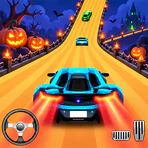
I’d choose a mobile racing game based on the sort of session I actually want. If I’m after a quick burst of arcade driving rather than a detailed simulation, Race Master 3D is an appealing fit: its racing is built around fast reactions, drifting, nitro and short bursts of competition. It is easy to understand at a glance, but the fun depends on whether you enjoy compact, action-first races more than careful driving and long-term setup.
Quick races, clear choices
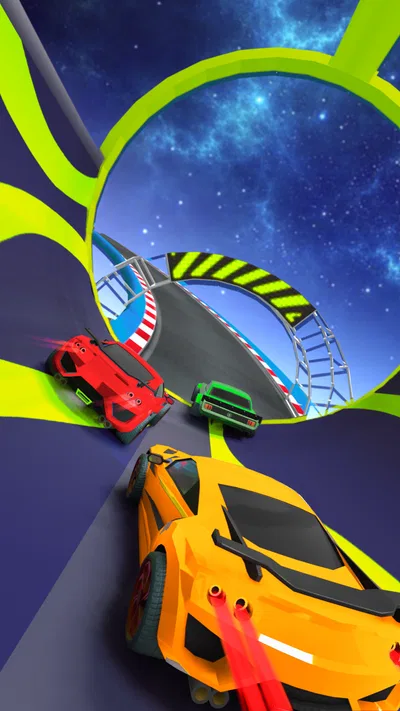
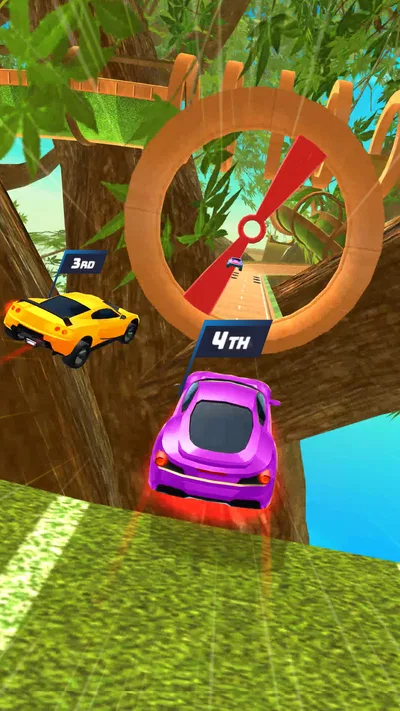
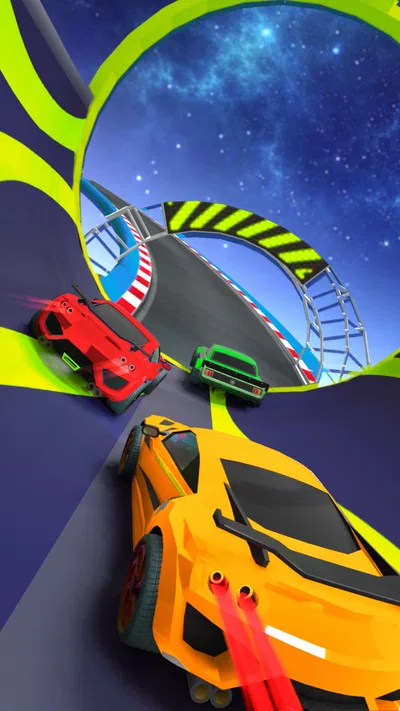
My first impression is that this is a game for picking up when I have a few spare minutes. A race asks for attention, but it does not demand the kind of commitment I associate with a realistic racing sim or a sprawling motorsport campaign. The basic appeal is immediate: steer through a course, manage a drift, use nitro when it helps, and try to finish ahead.
That focus makes Race Master 3D easy to recommend to someone who wants a racing game without having to learn complicated controls before the first enjoyable run. It is a free racing game from Beresnev Games, rated for Everyone, so its broad presentation suits casual play. The game has a 4.6 average from around 3.5 million ratings and more than 500 million installs, a sign of how widely it has found an audience rather than proof that every player will enjoy its style.
The more useful question is what kind of racing you want. If you enjoy quick decisions, a forgiving arcade feel and the satisfaction of improving a car over time, the core loop has a clear attraction. If you want realistic vehicle handling, intricate tuning or a long, deliberate race, I would look elsewhere. This game’s strength is immediacy, and that same strength limits how much depth a simulation-minded player may find.
What the racing asks of you
The driving is centered on timing rather than a full set of racing techniques. Drifting and nitro give you decisions to make during a run, but the game is not trying to reproduce the full workload of a real car. I found that a useful distinction: you can focus on the track and the moment-to-moment action instead of studying vehicle settings or memorizing a complicated control scheme.
That accessibility does not mean every run is automatic. A badly timed drift or boost can make it harder to keep momentum, so it pays to watch what the course is asking for rather than tapping through on instinct. My practical advice is to treat each attempt as a small lesson: notice where you lose control or waste nitro, then adjust one thing on the next run. That makes improvement feel more deliberate without turning the game into homework.
It is also a better fit for short, interrupted play than for a session where I want to settle in for an elaborate race weekend. For example, if I have a few minutes while waiting for a ride, I can start a run, focus on a single objective and put the game away afterward. The compact arcade approach makes that sort of use natural; it is less suited to someone seeking extended, realistic competition.
Progression with a purpose
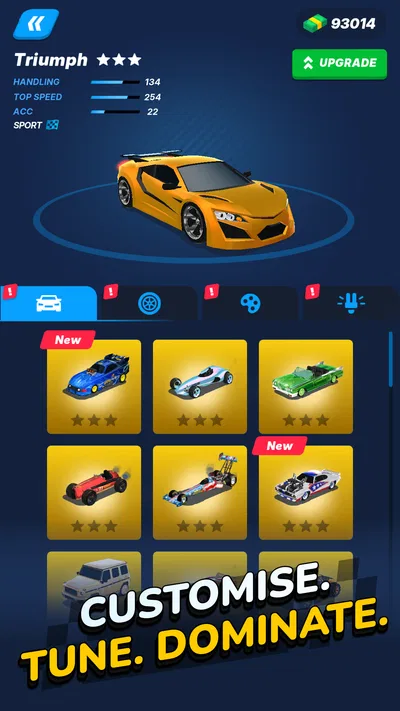
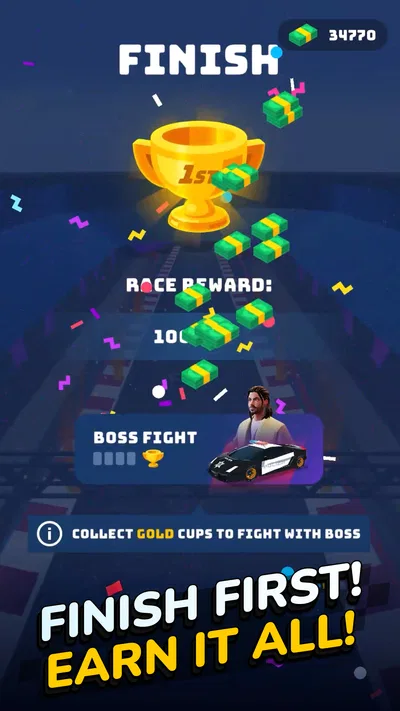
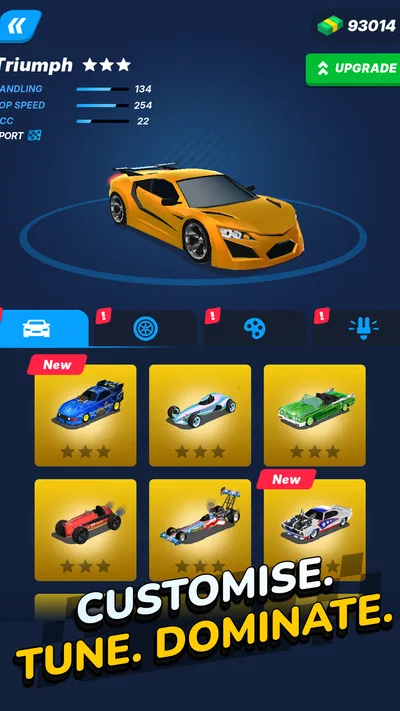
Upgrading cars gives the racing a longer-term thread. Rather than treating each run as entirely separate, you can work toward improving your vehicle and taking on bosses. That creates a useful rhythm: race, earn progress, strengthen your car and return to a tougher challenge. For me, the boss encounters are particularly valuable because they give progression a destination instead of making upgrades feel like numbers that rise for their own sake.
A small but useful way to approach upgrades is to avoid spreading attention across every available improvement at once. Focus on the changes that seem to help with the parts of racing you struggle with, then judge the result over several attempts. This keeps the upgrade loop tied to your own play rather than encouraging automatic purchases or random experimentation. The exact best choice will depend on how you handle the races, so I would make adjustments based on experience, not on an assumed universal build.
There is a trade-off here. Car upgrades and boss progression can make repeated races feel purposeful, but players who prefer to win mainly through their own driving may dislike a system where improving the vehicle is part of moving forward. If you want every result to come from a fixed car and pure skill, a more traditional racing game may suit you better. If you enjoy seeing a car develop alongside your ability, the progression is a welcome reason to return.
Offline play and everyday convenience
Offline racing is one of the most practical reasons to consider this game. It gives me an option when a connection is unreliable or when I want to play somewhere with no dependable service. That makes it a better travel companion than a racer whose central appeal depends on live competition. I would still choose an online-focused alternative if playing against real people is the main point for me; offline convenience and social competition serve different moods.
For a realistic everyday scenario, imagine a commute with a short wait at either end and an internet connection that comes and goes. This is the kind of game I would open for a quick race rather than start a lengthy campaign that I may have to abandon halfway through. The key is to treat it as a compact arcade diversion, not as a substitute for a deeper racing experience. Its offline play expands where it can be useful, while its short-session strengths shape how I would use it.
Offline access is also worth thinking about before installing if you mainly play on the move. I would test the experience in the setting where I expect to use it, rather than assume every part of the game behaves the same way without a connection. The central appeal is racing, but a player’s preferred mode of play can still determine whether the game feels convenient or restrictive.
How it compares with other racing styles
Compared with realistic driving games, this one asks less of you in vehicle knowledge and more of you in quick timing. That is a meaningful advantage when I want action immediately, but a clear disadvantage if I enjoy fine control over handling and setup. Sim-focused alternatives are the better pick for players who want measured laps and a convincing sense of driving a particular kind of car.
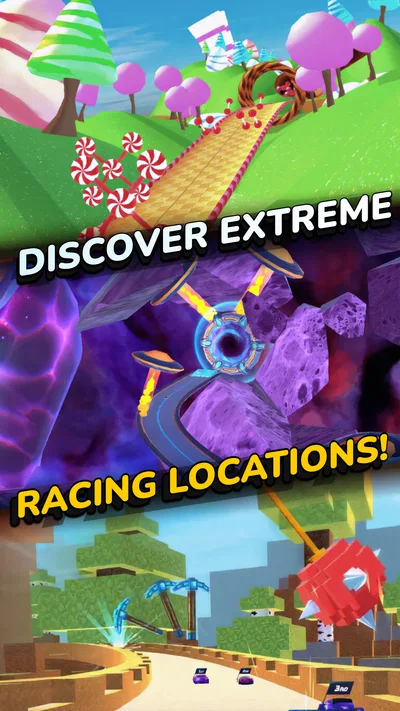
Compared with open-world racers, the appeal is not the promise of roaming around a large environment at my own pace. I would choose an open-world option when exploration and discovering routes matter as much as the race itself. Here, the more direct appeal is the run, the drift, the boost and the next challenge. The trade-off is less room for leisurely exploration in exchange for a more focused arcade session.
It also occupies a different space from racing games centered on head-to-head online competition. If the main reason you play is to race friends or climb a live competitive ladder, look for a game designed around that social structure. Race Master 3D makes more sense when you want accessible racing and progression without making online opponents the whole point. I would choose based on the activity I want, not just on the broad label of “racing game.”
What to expect from the free-to-play model
The game is free to download, with in-app purchases ranging from $0.99 to $28.99 per item. That means there is a difference between trying the game and deciding to spend in it. I would begin without buying anything, see whether the races and upgrade loop hold my attention, and only consider a purchase if it addresses a friction I have actually encountered.
One practical safeguard is to decide on a spending limit before playing, especially if you tend to make small purchases impulsively. The listed range includes items at different price points, so the fact that the game is free does not mean every optional purchase will feel trivial. I would treat payment as a personal choice, not as a prerequisite for finding out whether the arcade racing suits me.
For players who dislike in-app purchases on principle, that model may be reason enough to skip it and choose a paid racing game instead. A paid alternative can feel more straightforward if you prefer to know the purchase structure up front. On the other hand, someone who wants to test an arcade racer before deciding whether to spend can appreciate being able to start for free. Neither preference is wrong; the important thing is to know which kind of deal feels comfortable to you.
Compatibility, scale and who should pass
The game’s current version is 3.18.7.3579, and it supports Android 7.1 and later. I would check that minimum requirement before trying to install it on an older device, since an incompatible operating system can stop an otherwise interested player at the outset. The age rating is Everyone, which makes its intended audience broad, though a rating alone cannot tell you whether the driving style will match your taste.
Its audience is substantial: the game has around 11,000 written reviews alongside its much larger rating count. I would read individual comments for issues that matter to my own device or preferences, while remembering that other players may value different things. A large audience tells me the game has broad reach; it does not replace deciding whether its compact arcade format is right for me.
I would skip it if realistic handling, elaborate car setup, open-world exploration or sustained online competition are non-negotiable for you. I would also be cautious if spending options are a recurring frustration, even though downloading the game costs nothing. Players looking for a straightforward, accessible arcade racer, especially one that can be enjoyed offline, have a stronger reason to give it a try.
My recommendation
Overall, I recommend Race Master 3D to casual players who want quick racing, simple-to-grasp action and a reason to improve cars between challenges. Its combination of drifting, nitro, upgrades, bosses and offline racing gives it a more specific appeal than a generic one-button driving diversion, while keeping the focus on short arcade sessions. I especially like the way the upgrade loop gives repeated runs a goal, provided you enjoy progression as part of winning.
I would not present it as the best choice for every racing fan. If your ideal game involves precise simulation, broad exploration or direct competition with other people, a different category of racer will serve you better. But if you want something you can open during a spare moment, learn through repeated runs and play without relying entirely on a connection, this is an easy one to try. Start free, keep purchases optional, and decide after a few races whether the pace and progression make you want to come back.